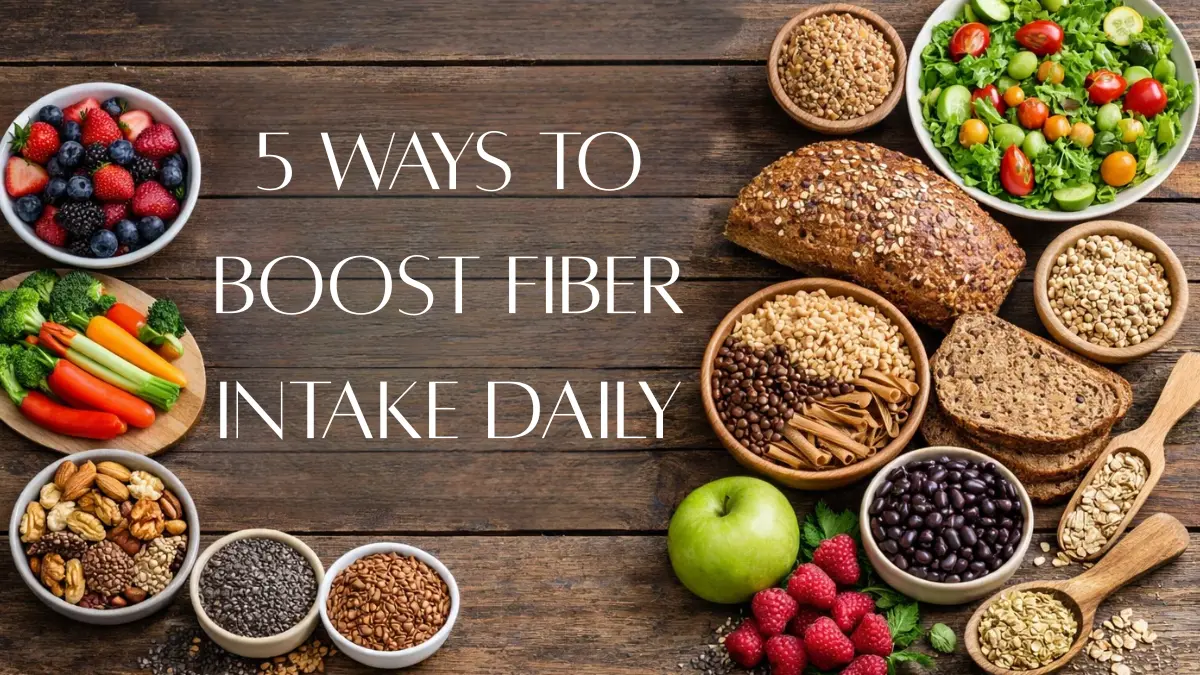
Fiber is one of the most important nutrients for maintaining overall health, yet many people don’t get enough of it in their daily diet. Whether you want to improve digestion, manage weight, control blood sugar, or support heart health, fiber plays a key role. In this article, we’ll explore 5 easy ways to boost your fiber intake daily, along with practical tips, benefits, and FAQs to make fiber an essential part of your diet.
🌿 Why Fiber is Important
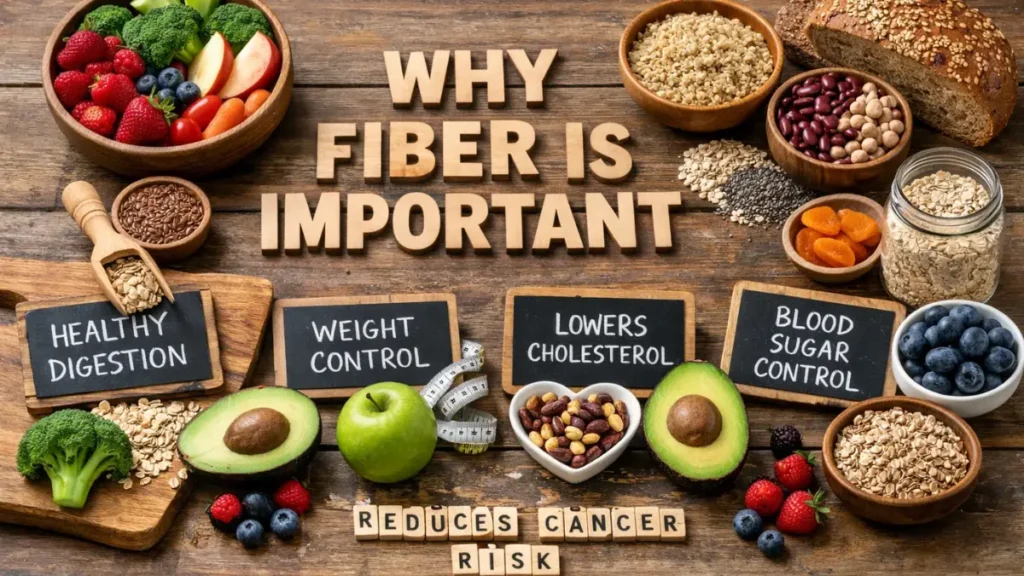
Fiber, also known as roughage, is the indigestible part of plant-based foods. It passes through your digestive system mostly intact, helping your body in several ways:
- Supports Digestive Health: Fiber adds bulk to stool and promotes regular bowel movements.
- Controls Blood Sugar Levels: Soluble fiber slows down sugar absorption, helping regulate glucose.
- Helps Weight Management: High-fiber foods keep you full longer, reducing overall calorie intake.
- Promotes Heart Health: Fiber lowers LDL cholesterol and supports healthy arteries.
- Improves Gut Health: Fiber acts as food for beneficial gut bacteria.
Daily Recommended Fiber Intake:
- Women: 25 grams/day
- Men: 38 grams/day
(Adjust based on age and activity level)
1️⃣ Start the Day with a High-Fiber Breakfast 🍓🥣
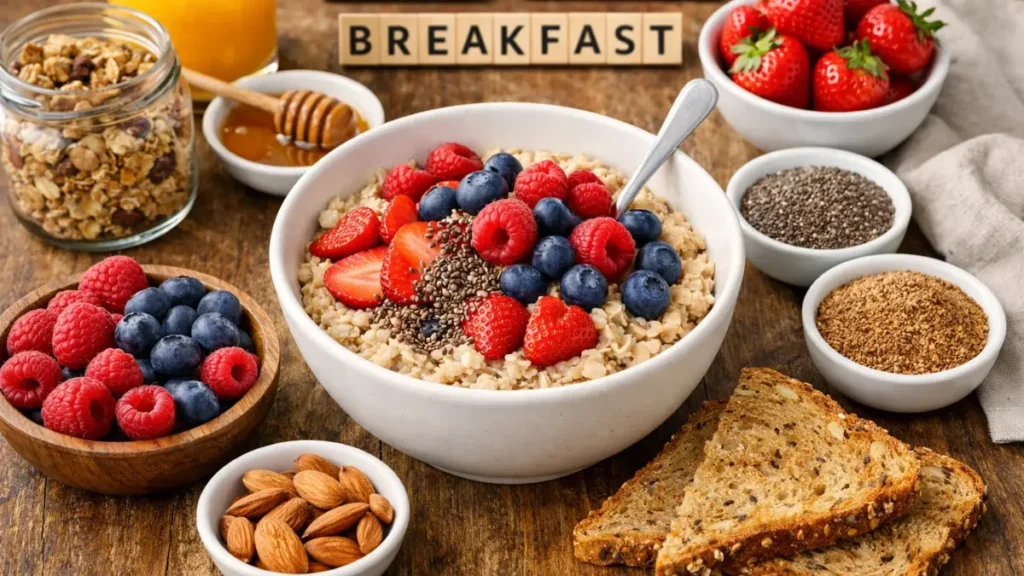
Breakfast is the perfect opportunity to get a fiber boost. Skipping fiber in the morning can lead to mid-morning cravings and overeating.
High-Fiber Breakfast Ideas:
- Oatmeal: Use rolled oats or steel-cut oats and cook with milk or water. Top with berries (strawberries, blueberries, raspberries) or sliced bananas.
- Whole-Wheat Cereals: Choose cereals with at least 3–5 grams of fiber per serving. Avoid sugary cereals with low fiber content.
- Shredded Wheat: High in fiber, and you can add nuts or seeds for extra crunch.
- Add Seeds: Sprinkle 1 tablespoon of chia seeds or ground flaxseeds on top. This adds 3–4 grams of fiber and healthy omega-3 fats.
Tips:
- Mix different fruits to get a variety of fiber types.
- Use unsweetened plant-based milk for extra nutrition.
- Fiber in breakfast keeps you full until lunch, helping with appetite control.
Benefits:
- Supports digestion
- Reduces mid-morning cravings
- Helps maintain energy levels
2️⃣ Swap Refined Grains for Whole Grains 🍞🌾
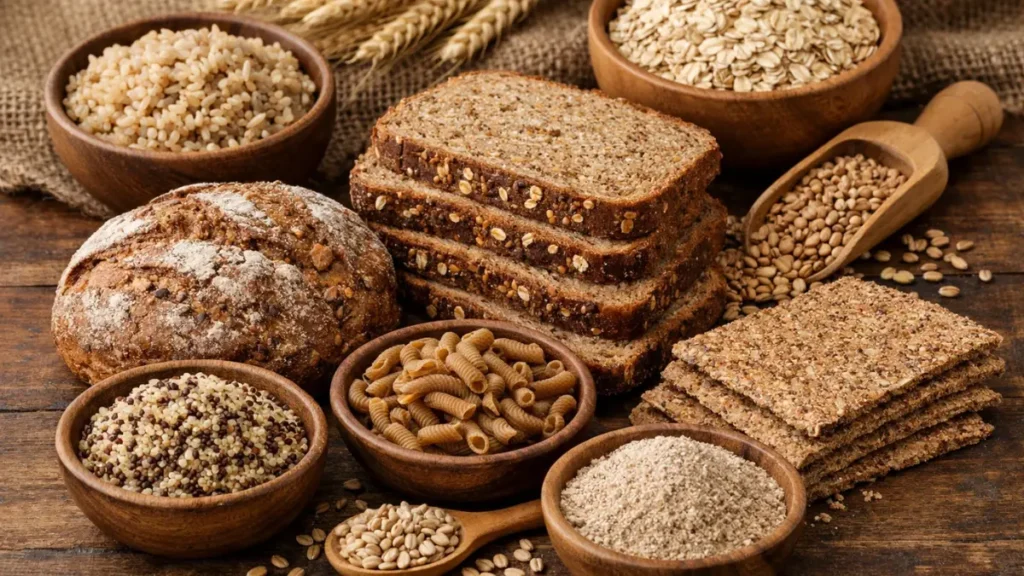
Refined grains (like white rice, white bread, or regular pasta) have most of their fiber removed during processing. Whole grains retain the bran and germ, providing essential fiber for digestion.
Whole-Grain Alternatives:
- Bread: Swap white bread for whole-wheat or multigrain bread.
- Rice: Replace white rice with brown rice, quinoa, bulgur, or barley.
- Pasta: Choose whole-wheat or whole-grain pasta.
Tips:
- Always check the ingredient label – the first ingredient should read “whole wheat” or “whole grain.”
- Gradually replace refined grains to avoid digestive discomfort.
- Combine whole grains with vegetables and legumes for a fiber-rich meal.
Benefits:
- Improves bowel regularity
- Keeps you full longer
- Reduces risk of chronic diseases like diabetes and heart disease
3️⃣ Eat Fruits and Vegetables with the Skin On 🍎🥕
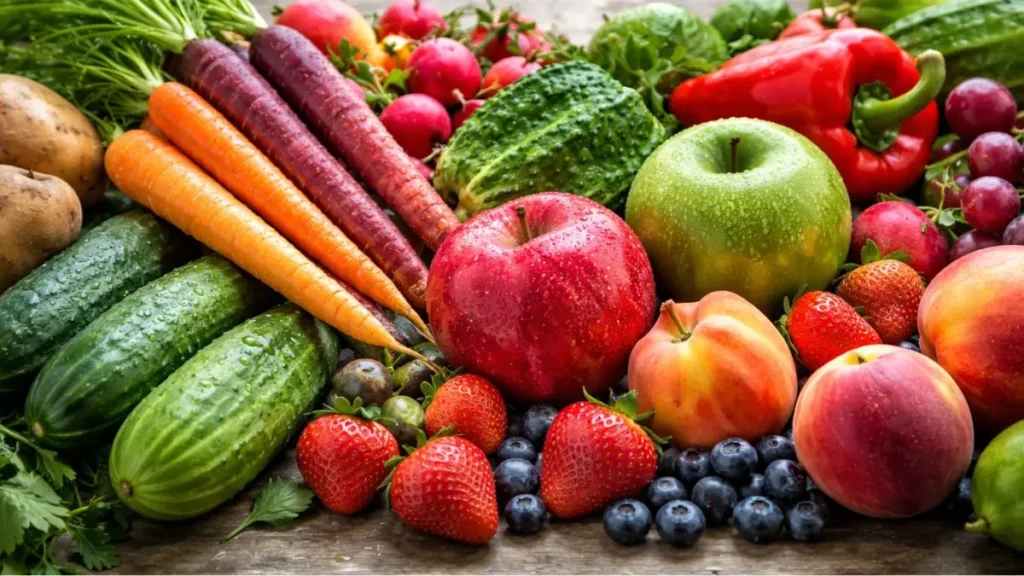
The skin of many fruits and vegetables contains a large portion of insoluble fiber, which helps bulk up stool and prevent constipation.
High-Fiber Skins to Include:
- Apples, pears, and plums 🍏🍐
- Carrots and cucumbers 🥕🥒
- Potatoes (with skin) and sweet potatoes 🍠
Tips:
- Wash fruits and vegetables thoroughly before eating to remove pesticides or dirt.
- For cooked vegetables, leaving the skin on preserves fiber content.
- Pair fruits with nut butter for added fiber and protein.
Benefits:
- Adds insoluble fiber for healthy digestion
- Supports weight management by increasing satiety
- Enhances nutrient intake, as skins are rich in vitamins and antioxidants
4️⃣ Add Legumes to Soups and Salads 🥗🫘
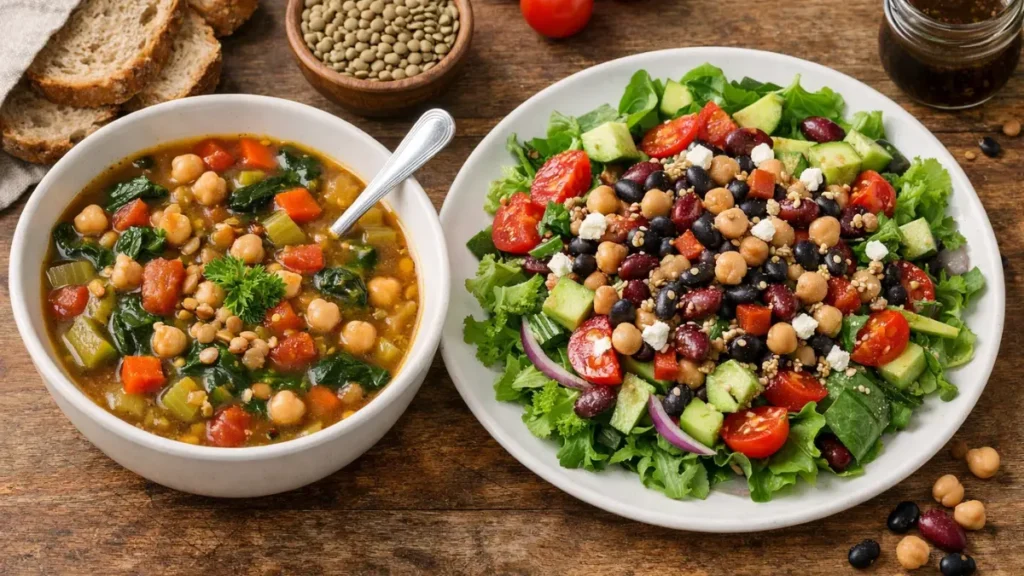
Legumes like beans, lentils, and chickpeas are fiber and protein powerhouses, making them perfect for lunch or dinner. They provide soluble fiber, which helps lower cholesterol and stabilize blood sugar levels.
Ways to Include Legumes:
- Soups & Stews: Add a half cup of beans or lentils to your favorite soups or stews.
- Salads: Toss chickpeas, kidney beans, or black beans into salads.
- Curries & Rice Dishes: Mix lentils into curries or brown rice dishes for extra fiber.
- Convenience: Use canned beans, but rinse them to remove excess sodium.
Fiber Content:
- ½ cup beans = 6–8 grams of fiber
- ½ cup lentils = 7–8 grams of fiber
Benefits:
- Improves digestion
- Stabilizes blood sugar levels
- Keeps you full longer, aiding in weight management
5️⃣ Snack on Nuts, Seeds, and Fruits 🌰🍏
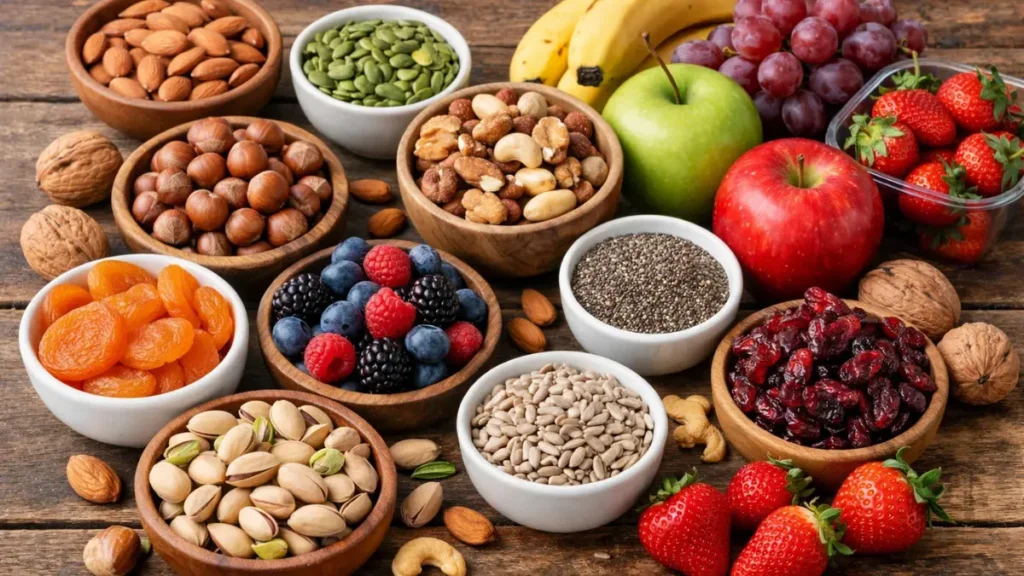
Processed snacks like chips or cookies are low in fiber and high in calories. Replacing them with fiber-rich snacks is a simple way to increase your daily intake.
High-Fiber Snack Options:
- Nuts: Almonds, pistachios, walnuts 🌰
- Seeds: Pumpkin seeds, sunflower seeds, chia seeds 🎃
- Whole Fruits: Apples, pears, berries 🍎🍐
- Popcorn: Air-popped popcorn is a surprising source of fiber and low in calories
Tips:
- Keep nuts and seeds in small portions – a handful (about ¼ cup) is enough.
- Combine fruits and nuts for a balanced snack.
- Carry portable snacks like apples or almonds for on-the-go fiber intake.
Benefits:
- Prevents unhealthy snacking
- Adds both soluble and insoluble fiber
- Supports heart health and digestion
🌟 Extra Tips to Increase Fiber Intake
- Drink More Water 💧 – Fiber works best with adequate hydration.
- Add Fiber Gradually ⚡ – Sudden increase can cause bloating or gas.
- Mix Different Fiber Sources 🍽️ – Combine fruits, vegetables, grains, and legumes for variety.
- Plan Meals Ahead 📅 – Incorporate fiber-rich foods into breakfast, lunch, dinner, and snacks.
- Read Nutrition Labels 📖 – Choose products with higher fiber content per serving.
📝 Sample High-Fiber Meal Plan
Breakfast: Oatmeal with chia seeds, berries, and nuts 🥣🍓
Snack: Apple slices with peanut butter 🍏🥜
Lunch: Brown rice, mixed vegetable curry, and lentil soup 🍚🥗
Snack: Roasted chickpeas or almonds 🫘🌰
Dinner: Quinoa salad with spinach, bell peppers, pumpkin seeds 🥗🎃
This plan easily provides 25–30 grams of fiber per day, meeting daily recommendations.
❓ FAQs – Fiber
Q1: How much fiber should I eat daily?
- Women: 25 grams/day
- Men: 38 grams/day
Q2: Can I get enough fiber from food alone?
Yes, by including fruits, vegetables, whole grains, legumes, and nuts in your diet. Supplements are optional if needed.
Q3: Will fiber help with weight loss?
Yes, fiber promotes satiety, reduces appetite, and helps in managing calorie intake.
Q4: Can I take fiber supplements?
Yes, supplements like psyllium husk are safe if consumed with enough water. Start slowly to avoid bloating.
Q5: Which foods are highest in fiber?
- Lentils, beans, chickpeas 🫘
- Oats, brown rice, whole wheat 🌾
- Fruits like apples, pears, berries 🍎🍓
- Nuts & seeds 🌰🌿
Q6: Can fiber prevent constipation?
Yes, both soluble and insoluble fiber help regulate bowel movements and prevent constipation.
Q7: How quickly will I see benefits?
Regular intake shows improvements in digestion, energy, and satiety within a few days to weeks. Long-term use supports heart and gut health.
Also Read : 7 Power Foods You Must Eat If You’re a Fitness Lover 💪🔥
🏁 Key Takeaways
- Fiber is essential for digestion, weight management, heart health, and blood sugar control.
- Include a variety of fiber-rich foods daily: fruits, vegetables, grains, legumes, nuts, and seeds.
- Supplements are optional if dietary intake is insufficient.
- Drink plenty of water and increase fiber gradually.
- Regular fiber intake improves digestion, skin health, and overall wellbeing 🌿✨
By following these 5 easy ways to boost fiber intake daily, you can enjoy a healthier gut, better digestion, and natural energy every day 🥗🌾💪